SIDE BY SIDE ACROSS THE ATLANTIC
How Sevenstar Yacht Transport turns fierce rivals into temporary neighbours
The toughest part of any major offshore race isn’t always the start. Often, it’s simply getting there.
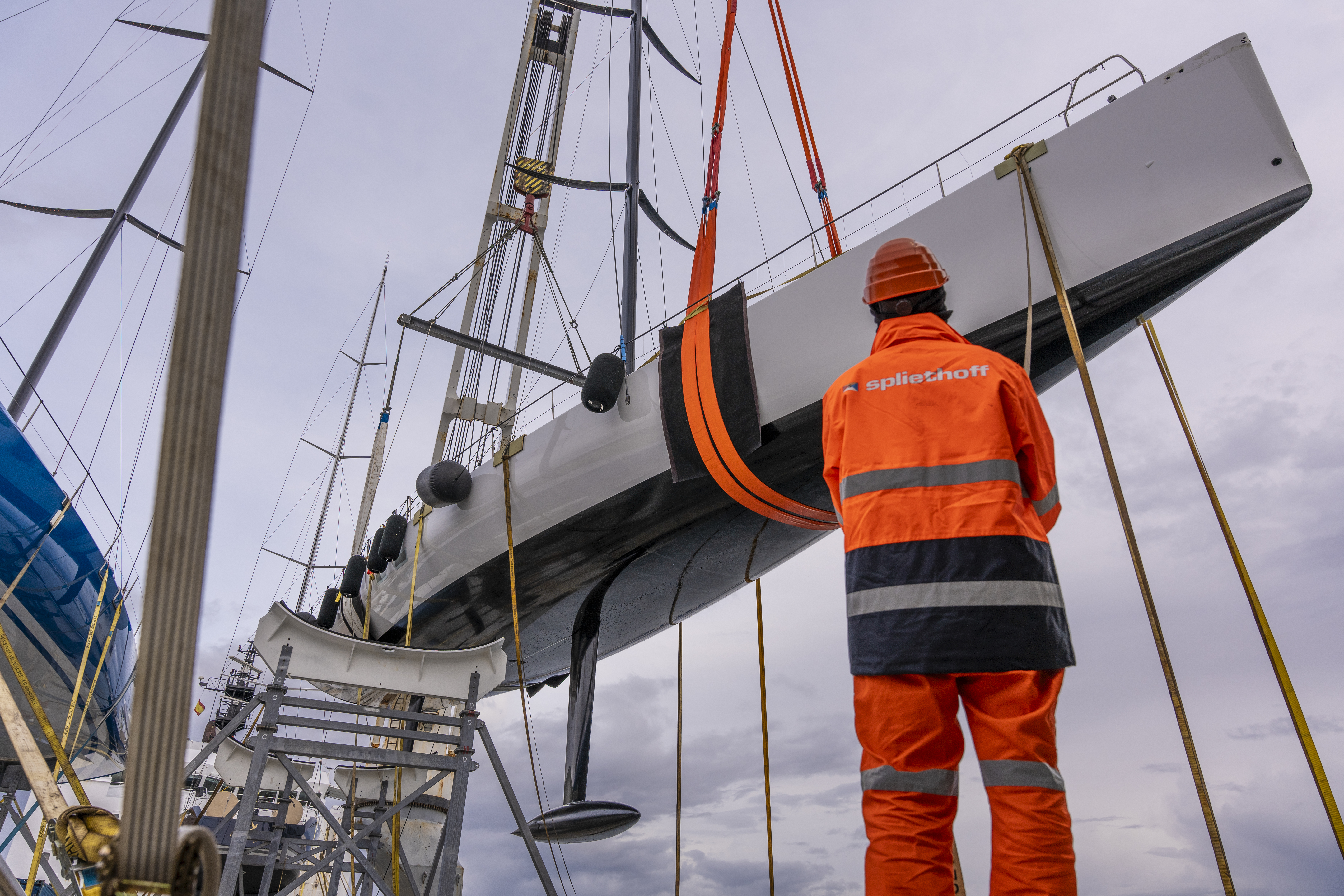
In the working calm of Genoa’s commercial port, 100‑foot race yachts are lifted onto the deck of MV Sivumut. The weather is the kind no sailor romanticises: sleet in the air, wind funnelling through the industrial basin, cranes swaying just enough to make every lift demand absolute attention. Among them, V rises between two shipboard cranes in a perfectly synchronized tandem lift, with two operators and one coordinated loadmaster, nothing casual at this scale. Nearby, Black Jack and Daguet 5 follow with carefully sequenced lifts of their own, each movement deliberate, each stage controlled. At this level, precision is non-negotiable.

“The boat is massive,” says Guillaume Berenger, boat manager of Black Jack. “Loading safely is a long sequence. Cradle first, then the yacht, then secure everything.” His tone carries both professionalism and relief. Everyone involved understands what this moment represents. In the era of global race programmes, getting to the starting line has become the hardest part. Arriving on time, intact, and race‑ready is no longer assumed; it’s engineered.

It is a rare sight, not only for the sheer scale of the yachts involved, but because these competitors, normally separated by seconds and tactics, now share the same steel deck, the same destination, and the same ambition. There is no start line here, no countdown, no advantage to be gained. Just steel, cranes, gravity, and the quiet understanding that this, too, is part of the race.

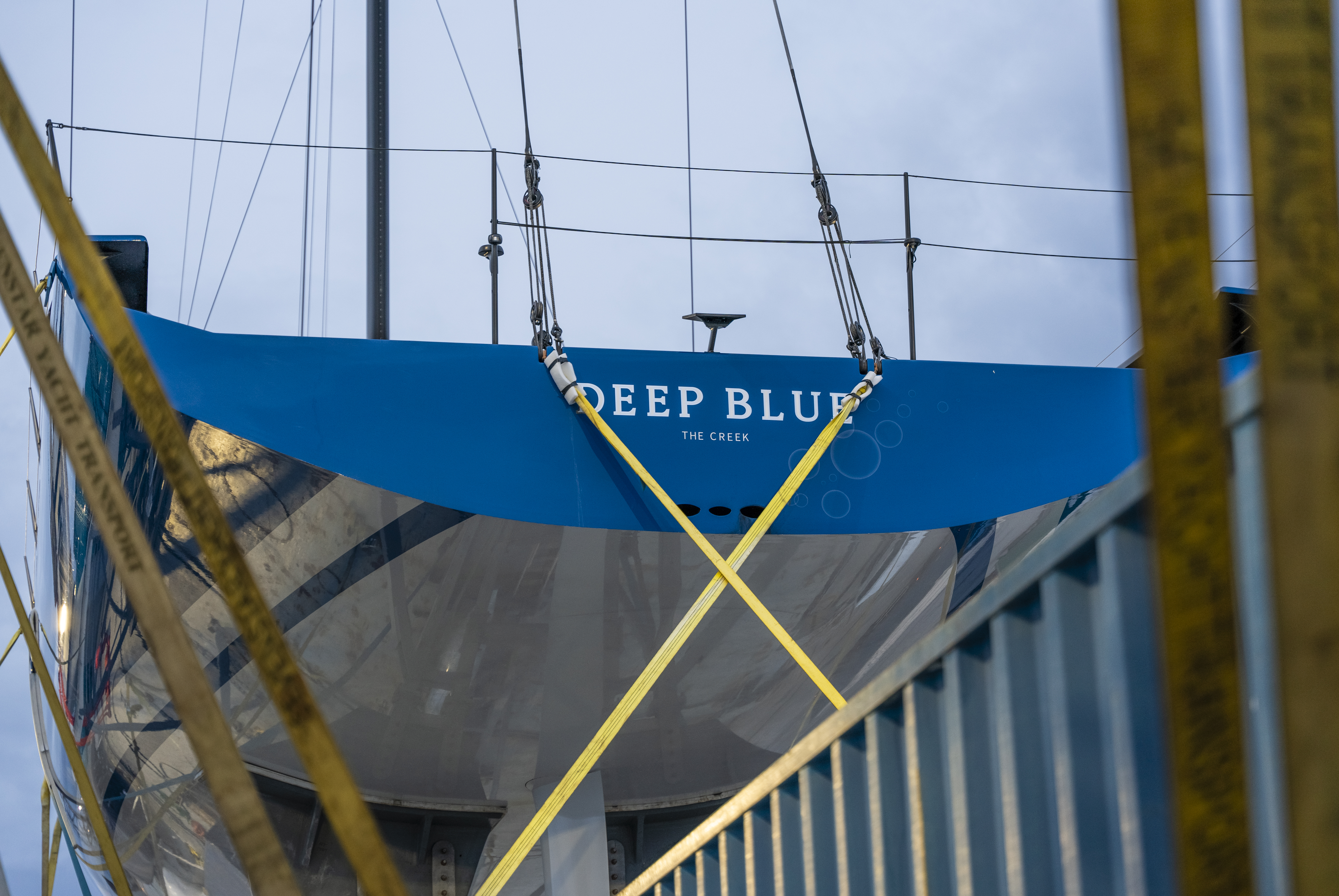
A few days later and a sea away, Palma de Mallorca offers a different kind of winter. Cold rain, grey skies, no drama, the kind of conditions shore crews quietly prefer. On MV Ukpik, Galateia is lifted aboard in a smooth two-crane operation, with the bow and stern rising in controlled harmony before settling into her cradle. Hummingbird joins the deck cargo in Palma as well, while Deep Blue begins her Atlantic journey from Sagunto, heading west to converge with the rest of the fleet.

“Rain is no issue,” says Mike Atkinson, captain of Galateia. “Wind is the enemy. With two cranes, we have complete control. One forward, one aft, pivoting together. The drivers are excellent. You feel the boat is in safe hands.”
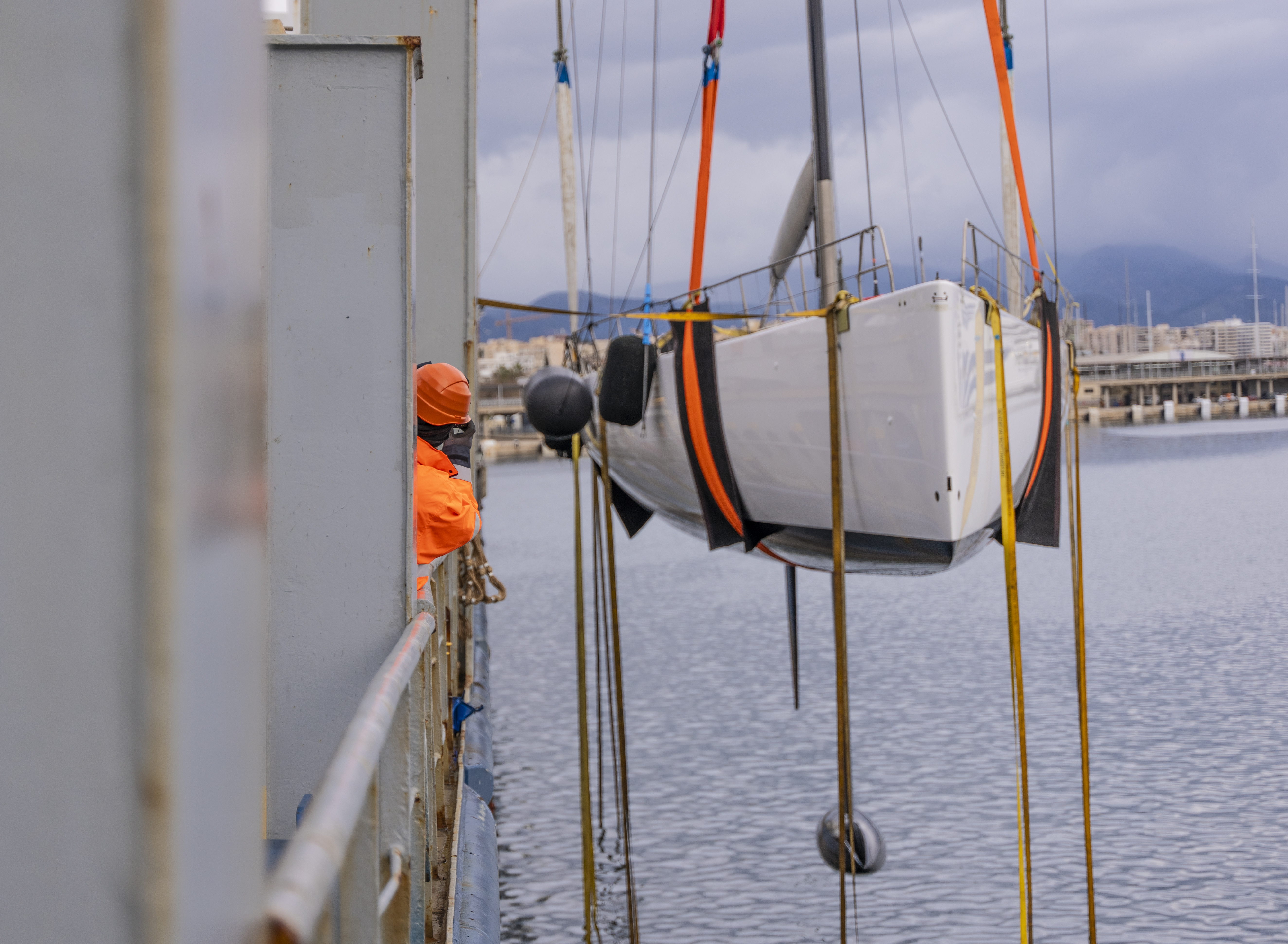
The contrast between Genoa’s sleet and Palma’s drizzle reflects two sides of the same logistical coin. Both are gateways to the Caribbean, and both are now integral to the competitive rhythm of modern race programmes.
Campaigns on the move
Every boat that arrives in Genoa or Palma brings more than the yacht alone. They arrive with their entire campaign: containers with spare ribs, sails, cradles, masts, winches, hydraulics, toolboxes, ribs, and the dense ecosystem of parts and equipment needed to disassemble, ship, reassemble, and race within days.
“The containers are as important as the boat,” Mike explains. “We carry two containers plus a 13‑metre RIB. Everything has to arrive with us. Without reliable container movement, we couldn’t meet the regatta schedule. Fifty percent of a racing programme is logistics.” Guillaume sees it the same way. “Genoa is a technical spot for us. We bring spare gear, tools, and everything needed to keep the boat at 100%. Our preparation here decides how ready we are on the Caribbean start line.”

These statements echo across both load ports. Modern racing campaigns rely on timing windows, coordinated transport, and downtime minimisation. Getting to the Caribbean intact is not a given; it’s a strategic requirement.
Rivals held still
There is an undeniable symbolism in seeing all these100‑foot race yachts, normally separated by boat lengths at speed, strapped down in stillness on the same deck. “Being loaded next to V and Daguet is funny,” Guillaume says. “I’ve known V since she was called Tango. Daguet has a strong team. In IRC terms, it’s impossible to predict anything now. Every boat has strengths in different conditions.”
In Palma, Mike points toward Deep Blue, lying only metres from Galateia. “We’re literally standing next to our competitors. We’re pulled up right beside Deep Blue. In a few weeks, we’ll be racing against them in Antigua. There’s camaraderie here, we’re like an army moving together across the Atlantic, but once we reach the start line, we’re one hundred percent focused on winning.”
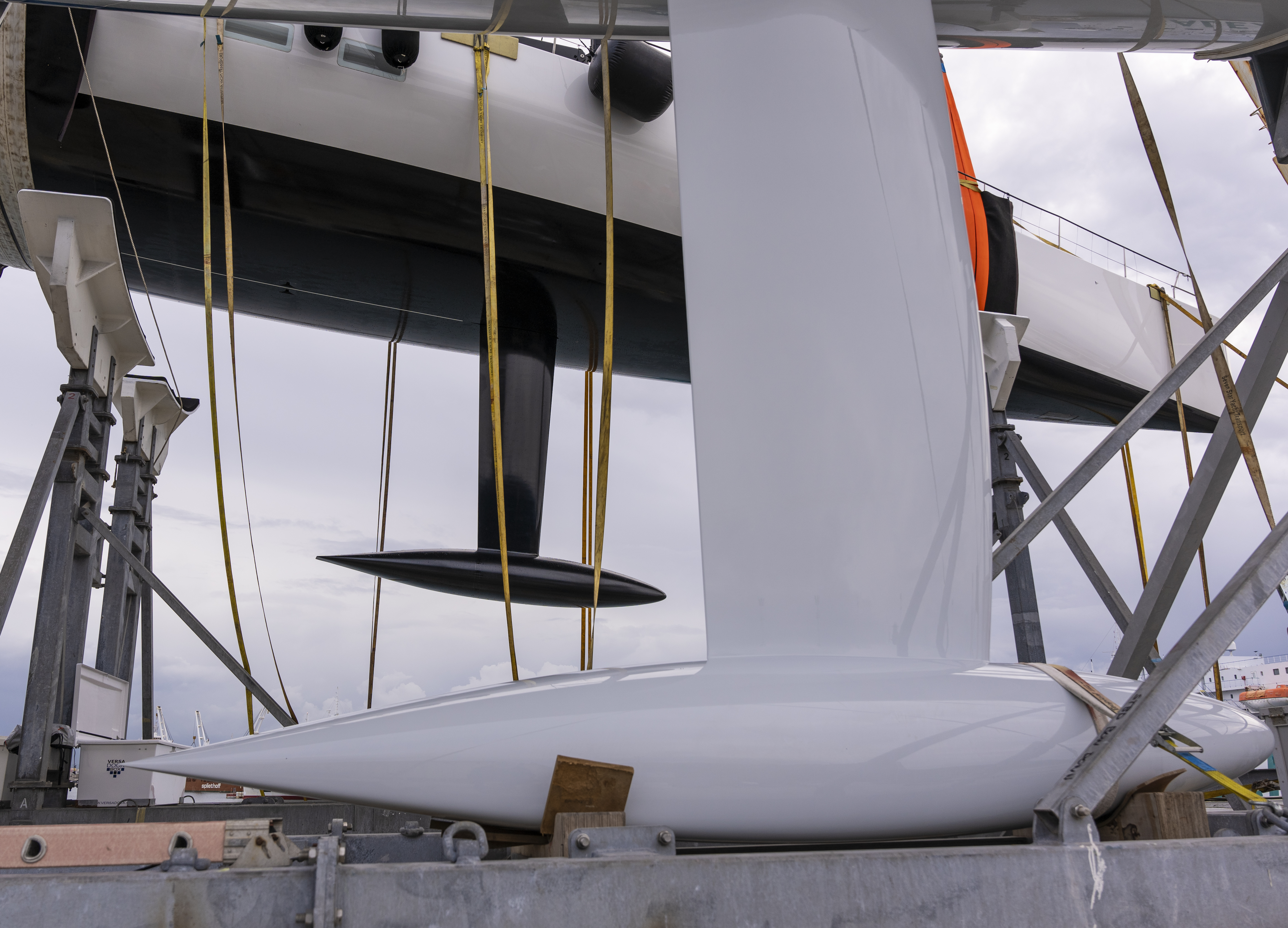
This surreal temporary proximity inspires the kind of humour only racers understand: “For now you’re alongside my beam… but once the Caribbean 600 starts, you’ll be chasing my stern.” These boats are built to separate, not to sit still side by side. Yet here they are, held immobile by seafastenings, heading west with the same trade winds in mind.
A new world ahead
Once MV Sivumut and MV Ukpik reach the Caribbean, everything changes. Winter becomes warm water and trade wind pressure. Grey European skies become blue tropical glare. Transport mode becomes race mode in days.
For Galateia, the calendar includes Antigua’s early-season regattas, the Nelson’s Cup, the RORC Caribbean 600, the St Barths Bucket, and the North Sound Regatta in the BVI, a cornerstone of the maxi programme before the teams reposition for the next phase of the season. “Our biggest rival is V,” Mike says. “They had a very good Caribbean season last year. We learned from that, made improvements, and did better in the Med. This year? Too close to call.”
After the season, Galateia will load again in the USVI, return to Palma for a short refit, and roll straight into the European circuit. “We move fast between seasons,” Mike says. “Planning and scheduling are critical.”
For Black Jack, the focus is the Caribbean 600 and the North Sound Regatta. Guillaume is clear: “In the IRC rankings, it’s impossible to predict this early. Conditions matter. Some boats perform well in light air; others in heavy. We’ll know more in a few days before the regatta.” The Caribbean is unforgiving. Warm seas, strong trades, and complex currents mean preparation matters as much as boat speed. Mistakes cost miles.
The real starting line
For the next few weeks, these yachts are crossing the Atlantic side by side. Soon after, they will try to beat each other. When the ships make landfall, the tempo shifts. Containers open, masts are stepped, crews return, shore teams reassemble. The stillness of the crossing immediately gives way to the kinetic rhythm of race preparation.
These yachts are built to twist, accelerate, and separate, but here they sit, temporarily locked together, heading west as unwilling companions. Soon they will be metres apart on a starting line, pushed to their limits by crews who spent the crossing in parallel but will spend the season in opposition.
For now, they share a deck. Soon, they will share the start. After that, the stopwatch decides.
What is clear is this: the race begins long before the gun, in ports like Genoa and Palma, under cranes and winter skies, where the discipline and preparation of grand‑prix offshore racing are built long before any sail is hoisted. These quiet, methodical moments do not make headlines, but they make the racing possible.